


- HOME >
- Types of Tea
Types of Tea
- [2015.03.24]
- Getting inspired by the rich food culture in Yunnan
While traveling in Yunnan province for hunting pu-erh tea, I often drop by the local restaurant. To be frank, I am very fascinated with local cuisine. It is one of my favorite times throughout my trip. The deeper we go, the thicker the taste of food it becomes Based on my experience, the taste of …
- [2015.03.22]
- Spring Tea Hunting in Yunnan 2015 Just Began
I have been in Yunnan since 20th March 2015 to hunt for new crop of raw pu-erh tea. Quality tea is first come first served In Lincang region of Yunnan, the very first crop of pu-erh tea is available around 20th March. Usually, tea is harvested starting from the gardens at lower altitude where generally …
- [2015.02.24]
- Why do you brew green tea at lower temperature?
Talking about brewing Japanese green tea, many people generally has accepted that it should be brewed at lower temperature as it was always emphasized in most of the internet media and books regarding tea topics, many resources explain that sencha has to be brewed at 70-80 degree C. Nevertheless, I personally prefer to use boiling …
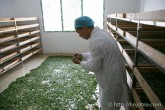
Many of us tend to associate Chinese tea with pu-erh tea and oolong tea. However, more than 70% of tea produced in China is green tea (approximately 1138,000 tons). Literally, we can say that Chinese tea = green tea as a whole. If you have ever travelled to China, you might discover that most of …
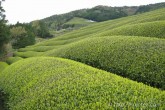
- [2015.01.17]
- Rich body and aftertaste, Uji Sencha Fukamushi
We quietly released Uji Sencha Fukamushi last year. Uji Sencha Fukamushi is not an ordinary Fukamushi sencha. Collaboration between Sencha and Fukamushi Sencha In Japanese, the “fukamushi” means deeply steamed. Fukamushi sencha is produced following the standard process in making a sencha, but a longer steaming process is conducted compared to ordinary sencha. The sencha …
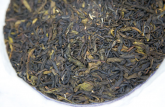
- [2014.12.29]
- The wild tea collected near the China-Myanmar border
The Myanmar border wild pu-erh tea is a raw pu-erh tea. It is made of the wild tea variety grown near the China-Myanmar border. The wild tea means the tea tree is growing in the mountain just like wild mushroom or wild plant in the natural environment and it’s not cultivated by human. If you …
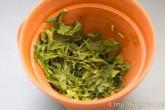
Asamiya sencha (朝宮煎茶) is from Shigaraki, Koga city in Shiga prefecture. Asamiya is the district that belongs to Shigaraki town.The taste of Asamiya sencha is very rich, full body and it gives lingering sweetness on our palate. In fact, full-body character is extremely rare for Japanese green tea. Asamiya is gifted place with special clay …
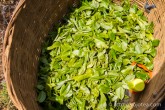
Many of us tend to associate Chinese tea with pu-erh tea and oolong tea. However, more than 70% of tea produced in China is green tea (approximately 1138,000 tons). Literally, we can say that Chinese tea = green tea as a whole. If you have ever travelled to China, you might discover that most of …
- [2014.10.02]
- Selecting Suitable Clay for Japanese Green Tea
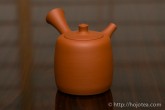
I would like to explain the points on how to choose the right type of clay teapot for a Japanese green tea. The taste alteration by various clay teapots The taste of tea will noticeably change depending on the type of clay we use. The outcome in the taste alteration using a clay teapot is …
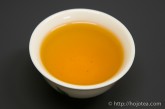
We have released 2 types of Yunnan black tea that gives muscatel flavour. The intensity of the muscatel flavour on these teas is not as strong as that of Mi Xiang Black Tea from Taiwan. These two teas are giving subtle extent of muscatel flavour that is acting like a back dancer that is to …
PAGE 14 OF 20

HOJO TEA Online Shop NEWS
- Yong De Wild White Tea 2026 – Limited Release
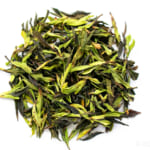
- We have released Yong De Wild White Tea 2026.We can produce only a very limited quantity each year, and it usually sells out within one or two days. If you are interested, please place your order as soon as possible. Origin and Background Yong De Wild Tea comes from wild Camellia taliensis trees growing naturally …
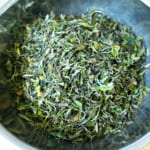
- New Release: High Mountain White Tea 2026
- We have released two white teas produced by us in Yunnan in 2026: Ancient White Tea 2026 and Ancient Bai Mu Dan 2026. Compared with an average year, this year’s white teas have richer flavor and stronger sweetness. Why Does White Tea Have Such a Strong Floral Flavor? White tea is produced using a very …
Popular ArticleTypes of Tea
 Yong De Wild White Tea 2026 – Limited Release
- We have released Yong De Wild White Tea 2026.We ca...
 Finding Mei Lan raw pu-erh tea at 2000m high
- One of the most popular pu-erh tea in our existing li...
 Gushu Dian Hong, The Rare Yunnan Black Tea made from Ancient Tea Tree
- The characteristic of Gushu Dian Hong is its intense a...
 New Release: High Mountain White Tea 2026
- We have released two white teas produced by us in...
 2 types of Special Taiwan Oolong Tea is Opened for Pre-Booking
- We had stayed in Taiwan for sourcing oolong tea. In...
 Wild tea “Mao-Cha” on sale only for a limited time
- There are a number of wild tea trees naturall...
 What is “Lao Cong” Phoenix Dong Cong Oolong?
- The Phoenix oolong tea is often called as Phoenix D...
 Mang Fei, One of 4 famous tea production areas in Lincang
- We have just Mang Fei raw pu-erh tea. Mang Fei is o...
 Rich body and aftertaste, Uji Sencha Fukamushi
- We quietly released Uji Sencha Fukamushi last year...
 Hybrid Tea Between Ripe Pu-erh Tea and Yunnan Black Tea
- We developed a new tea blended between Gong Ting grad...


Shop Info

Address:Lot No. T-215, 3rd Floor, The Gardens Mall, Mid Valley City, Lingkaran Syed Putra, 59200 Kuala Lumpur
Tel: +603-2287-4537
Business Hour: 10am to 10pm
Category
- New Arrival at HOJO Online Shop
- Featured Articles
- Newsletter
- Types of Tea
- Origin of Tea
- Teapot and Tea Equipment
- Tea Column
- How to enjoy tea
- Tea Processing
- How to choose quality tea
- Tea constituents and functional effect
- Safety of Tea
- Foods
- Tea Business Operation
- Hobby and Outdoor Activity
- Ranking of Tea
- Video
- FAQ
- Media Release
Profile

- AKIRA HOJO
- I invite you to experience my tea selections.I was born in Nagano, Japan. In university, I studied agricultural chemistry, and I have the master degree in food science. I worked in Japanese food industry for 10 years. I involved in R&D, QC and QA. As a factory manager, I implemented ISO9000 series and managed the factory.


Media Release
- The Art of Tea Magazine
- We posted the article on “The Art of Tea Magazine No.9, the magazine is published in Taiwan. We featured some scientific view about the tetsubin
- New Straits Times
- The Malaysian National Newspaper, New Straits Times featured HOJO Tea on 17-Oct-2007.